
“Prayer is not a list of requests. It is an introspective process, a clarifying, refining process of discovering what one is, what he should be, and how to achieve the transformation. Indeed, the commandment to pray is expressed by the Torah as a service of the heart, not of the mouth (Talmud, Tractate Taanis 2a)…. Prayer is uniquely a human function, because it blends man’s intelligence and imagination with his ability to put concepts into words. The faculty of intelligent speech, more than any other, sets man apart from animals.”
Excerpted from Rabbi Nasson Scherman, “Prayer: A Timeless Need,” The Complete Artscroll Siddur (Brooklyn, N.Y.: Mesorah Publications, 1990; orig. 1984).
Hebrew Word of the Day
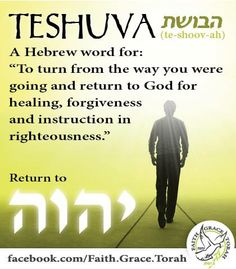 The Hebrew word teshuvah comes from the hollow shoresh (root) שוב, which has a tandem (2-part) meaning:
- to turn away from sin, pagan ways, and/or worldliness, and
- to simultaneously turn to/toward HaShem and His ways.
This involves not just remorse over a committed sin, but also a commitment to never return to it, opting for Torah living instead.
Hebrew Word of the Day
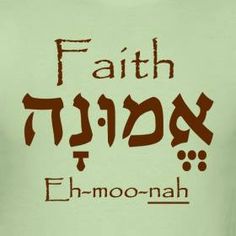 Rabbi Daniel Lapin teaches that the root of the Hebrew word for faith (emunah) is a picture of the glue-making process: taking an animal (aleph) hide and soaking it in water (mem) to make a glue (nun = peg), so faith, like glue-making, involves a sacrifice — the sacrifice of whatever in us is pagan.
What does that look like? In Temple-less Judaism, it is constructed on the “Three Ts” — teshuvah (repentance), tefillah (prayer), and tzedeqah (righteousness, i.e. ministry to others). Judaism would agree with Ya’aqov (James) in his “faith without works is dead” teaching. These three Ts are the fruit that genuine faith produces.
Hebrew Word of the Day
 The Bible has nothing good to say of the person who behaves like a brute (beast). We first encounter the word בַּעַר in Psalm 49:11 (English 49:10), but it is Psalm 73:23 (22) which unpacks its meaning — “So brutish was I, and ignorant; I was as a beast before you.”
A brute is someone who would strike a cripple down or would treat a brother like a slave outside of Israel is treated. A brute is considered a person who is human in form but a beast in behavior.
Hillel said of the brutish person: “The brute will not fear sin. The ignoramus will not be saintly…. In the place where there are no human beings, try to be one.” (Pirqei Avoth 2:5). Rashi defines a brute as “one bereft of any qualities,” and Maimonides echoes this, insisting that a brute is devoid of wisdom and ethical qualities.
Hebrew Word of the Day
 There are surprisingly few occurrences of the word זַיִת in the Hebrew Bible — only 38. The word can refer both to the fruit and to the whole tree.
Hebrew Word of the Day
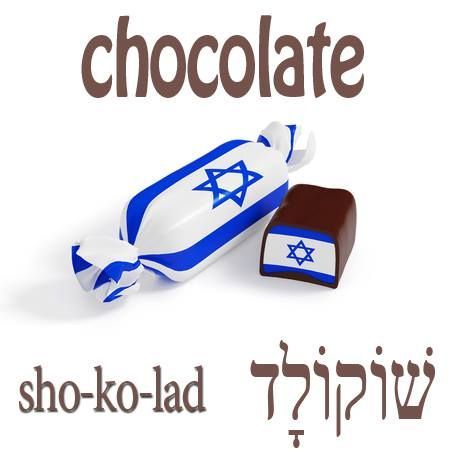 Here’s a fun one from modern Hebrew… back to Biblical vocabulary tomorrow.
Hebrew Word of the Day
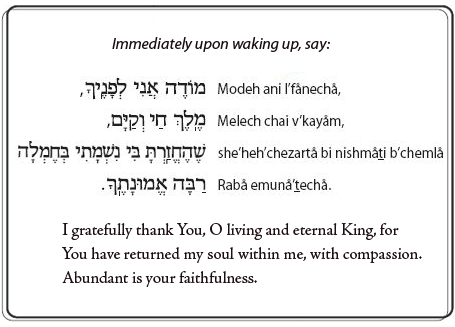 Today, let’s look at the word “neshama” (נְשָׁמָה). R’ Aryeh Kaplan has an article on Aish.com discussing “the three parts of the soul,” identifying them as the nefesh, the neshama, and the ruach.
R’ Kaplan explains:
God’s exhaling a soul can be compared to a glassblower forming a vessel. The breath (neshama) first leaves his lips, travels as a wind (ruach) and finally comes to rest (nefesh) in the vessel. Of these three levels of the soul, neshama is therefore the highest and closes to God, while nefesh is that aspect of the soul residing in the body. Ruach stands between the two, binding man to his spiritual Source. It is for this reason that Divine Inspiration is called Ruach HaKodesh in Hebrew. The neshama is affected only by thought, the ruach by speech, and the nefesh by action.
NASB translates neshama variously as blast (2), breath (15), breathes (1), life (1), persons alive (1), spirit (2), and who breathed (3).
See also the article on “Mi Yodeya”: http://judaism.stackexchange.com/questions/8921/nefesh-neshama-and-ruach-as-words-for-soul
Hebrew Word of the Day
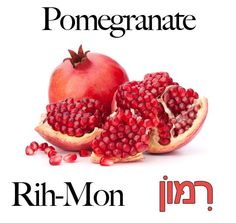 This Middle Eastern fruit is reputed to have 613 seeds — one for each command of the Torah. The English name reflects this in that it means, literally, “apple of many seeds.”
Hebrew Word of the Day
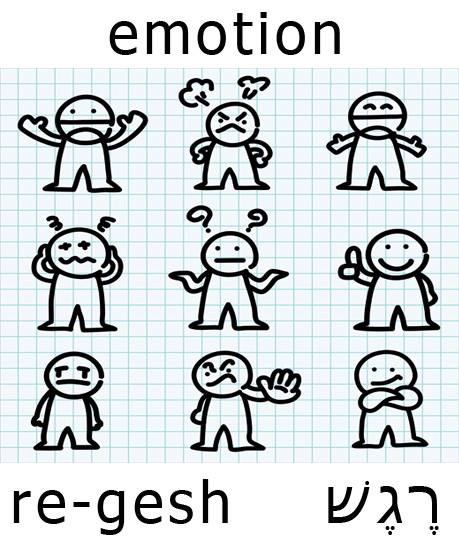 Notice that both vowels in this word are seghols. This class of word is called a segholate noun, and the stress (accent) will always be on the first seghol, never the second. One of the few “always” statements in Hebrew grammar and syntax. Todah (thanks) to Paul Wilbur for the graphic.
On the Importance of Arts in Education

 Yiddishkeit 101™